
Can an Outdoor Kitchen Be Installed Under an Existing Patio Cover?
Yes, an outdoor kitchen can be installed under an existing patio cover, provided the structure has adequate ventilation, sufficient clearance for cooking equipment, and safe access to utilities. Homeowners can often add built-in grills, countertops, refrigerators, and storage without replacing their current patio cover. However, the design must account for fire safety, structural limitations, and local building requirements.
An outdoor kitchen is one of the most exciting ways to transform an existing patio into a functional outdoor living space. Instead of building an entirely new structure, homeowners may be able to maximize the patio cover they already have while creating a convenient space for cooking, entertaining, and relaxing.
At Buildometry, we specialize in creating custom outdoor living spaces that combine thoughtful design, quality craftsmanship, and everyday functionality. From custom patio covers and outdoor kitchens to stonework and built-in features, our team helps homeowners create outdoor environments that complement their homes and lifestyles. Whether you envision a simple grilling station or a fully equipped outdoor kitchen, understanding the requirements of your existing patio cover is the first step toward a successful transformation.
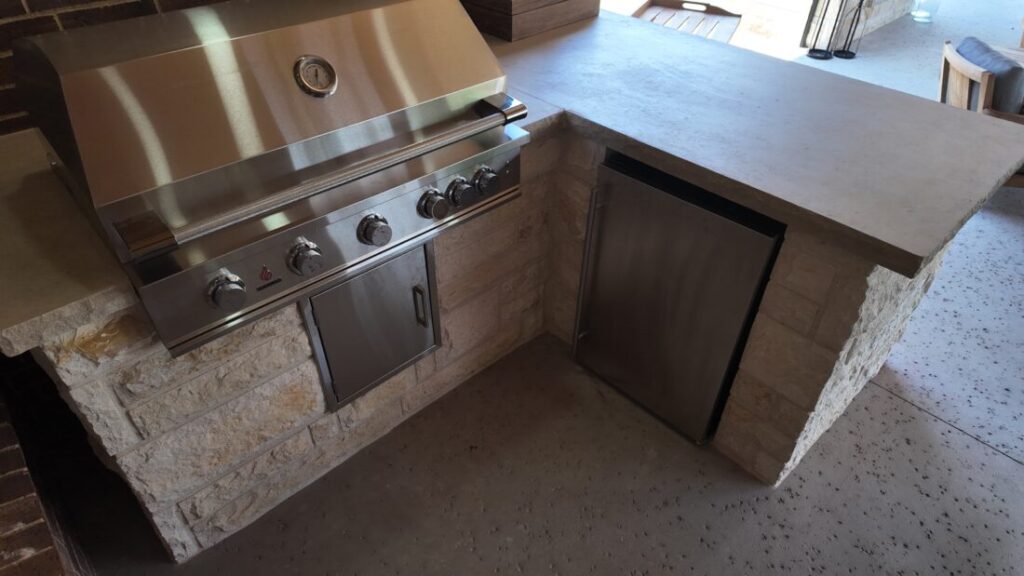
Adding an Outdoor Kitchen to an Existing Covered Patio
Installing an outdoor kitchen beneath an existing patio cover requires more than selecting appliances and countertops. The structure, layout, ventilation, and utilities must work together to create a safe, comfortable, and attractive space.
1. Can Your Existing Patio Cover Support an Outdoor Kitchen?
Many existing patio covers can accommodate an outdoor kitchen, but their design and condition should be evaluated before construction begins.
The first step is determining whether the covered patio provides enough space for appliances, food preparation, and comfortable movement.
Important considerations include:
- Structural condition: Existing posts, beams, roofing materials, and connections should be inspected for deterioration or damage.
- Ceiling height: Cooking equipment may require specific overhead clearances and ventilation systems.
- Available floor space: The layout should provide enough room for countertops, appliances, and walkways.
- Patio foundation: Heavy masonry islands, stone countertops, and built-in appliances may require additional concrete support.
- Roofing materials: Combustible overhead materials can affect grill placement and ventilation requirements.
While a patio cover may not need to support the kitchen island itself, the surrounding structure must be compatible with the proposed equipment.
Buildometry can help homeowners evaluate their existing outdoor living areas and develop designs that complement the original structure.
2. What Ventilation Is Required for an Outdoor Kitchen Under a Patio Cover?
Proper ventilation is one of the most important requirements for installing an outdoor kitchen beneath a patio cover.
Grills and other cooking appliances produce heat, smoke, grease, and combustion gases. Without adequate ventilation, these can accumulate beneath the roof and create uncomfortable or potentially dangerous conditions.
Depending on the equipment and patio configuration, ventilation solutions may include:
- Outdoor-rated ventilation hoods designed for the selected grill
- Properly sized exhaust systems that discharge outdoors
- Adequate clearance between cooking equipment and overhead materials
- Open sides that support natural airflow
- Appliance placement that directs smoke away from seating areas and the home
Not every covered patio requires the same ventilation system. A fully open patio cover may have different requirements from a partially enclosed outdoor living area.
Important: A standard indoor range hood is not necessarily suitable for outdoor installation. Grill manufacturers specify clearance and ventilation requirements that should be followed during design.
Before installation, homeowners should confirm applicable building codes and manufacturer instructions.
3. Which Outdoor Kitchen Features Work Best Under a Covered Patio?
A covered outdoor kitchen can include many of the same conveniences as an indoor kitchen, provided the appliances and materials are rated for the intended environment.
Popular features include:
Built-In Grills
A built-in grill often serves as the centerpiece of an outdoor kitchen. Gas and charcoal models have different clearance, ventilation, and installation requirements, so equipment selection should happen early in the design process.
Stone Countertops and Kitchen Islands
Durable countertop materials, including appropriately selected natural stone and outdoor-rated surfaces, provide space for preparing meals and serving guests. Custom stonework can also help the kitchen complement existing patio columns, fireplaces, and surrounding landscaping.
Outdoor Refrigerators
An outdoor-rated refrigerator keeps beverages and ingredients conveniently accessible without requiring repeated trips inside.
Storage Cabinets
Weather-resistant cabinets provide organized storage for grilling accessories, cookware, and serving essentials.
Built-In Bars and Seating
A bar-height counter can turn a functional cooking area into a gathering space where guests can socialize while meals are prepared.
The best layout depends on the patio’s dimensions, cooking preferences, and available utility connections.
4. Do You Need New Gas, Electrical, or Plumbing Connections?
Adding an outdoor kitchen often requires new utility connections, even when the patio cover is already installed.
The exact requirements depend on the appliances and features selected.
Common utility considerations include:
- Gas: Built-in gas grills and side burners may require new or extended gas lines.
- Electricity: Refrigerators, lighting, outlets, and ventilation equipment need appropriate electrical connections.
- Plumbing: Outdoor sinks require a suitable water supply and an approved drainage solution.
- Drainage: Water management should prevent standing water around appliances, cabinets, and the patio foundation.
Electrical installations must use equipment and protection appropriate for outdoor conditions. Gas lines should be installed and tested by qualified professionals.
Permits and inspections may also be required depending on local regulations and the project’s scope.
Planning these connections before constructing the kitchen island helps minimize unnecessary demolition and costly changes later.
5. How Can You Make an Existing Patio Kitchen Look Custom-Built?
The most successful outdoor kitchen additions feel like a natural extension of the original patio rather than an afterthought.
Matching materials, finishes, and architectural details can create a cohesive appearance.
Consider these design strategies:
- Coordinate stonework with existing patio columns or exterior masonry.
- Select countertop colors that complement the home’s exterior.
- Incorporate lighting for evening cooking and entertaining.
- Position the grill away from primary seating areas when possible.
- Include convenient storage to reduce clutter.
- Preserve comfortable walking paths between the kitchen, dining area, and backyard.
For homeowners who want additional functionality, the project may also include a custom bar, outdoor fireplace, or expanded patio surface.
At Buildometry, our approach focuses on creating outdoor living spaces that balance aesthetics with practical everyday use.
Frequently Asked Questions About Covered Outdoor Kitchens
Can you put a built-in gas grill under a patio roof?
Yes, but only when the grill is approved for the proposed installation and all manufacturer-specified clearances, ventilation requirements, and applicable codes are satisfied. Some grills are not suitable for use beneath combustible patio covers.
Does an outdoor kitchen need a concrete foundation?
Outdoor kitchen islands generally need a stable, adequately supported base. Existing concrete may be sufficient, but heavy stone or masonry construction can require additional reinforcement or a separate foundation.
Can you add an outdoor kitchen without replacing the patio cover?
Yes. Many outdoor kitchens can be designed around existing patio covers, provided the structure, available space, ventilation, and utility access meet the project’s requirements.
Is a covered outdoor kitchen better than an uncovered one?
A covered outdoor kitchen offers additional shade and protection from certain weather conditions. However, it also requires careful attention to ventilation, heat clearance, and appliance placement.
Ready to Transform Your Covered Patio Into an Outdoor Kitchen?
Your existing patio cover could be the starting point for a beautiful, functional outdoor cooking and entertaining space.
Buildometry specializes in custom outdoor kitchens, patio covers, stonework, and outdoor living spaces designed around your home and lifestyle.
Whether you want a built-in grilling station or a complete outdoor kitchen with custom countertops, storage, and seating, our team can help you explore the possibilities.
Ready to bring your outdoor kitchen vision to life? Contact Buildometry today to start planning your custom outdoor living space!