
Can You Add a Custom Stone Retaining Wall to a Sloped Backyard?
Yes, you can add a custom stone retaining wall to a sloped backyard to create more usable outdoor space, support changes in elevation, and improve the overall landscape design. A properly constructed retaining wall holds back soil while incorporating drainage and structural reinforcement where needed. The right design depends on your property’s slope, soil conditions, wall height, and intended use.
A sloped backyard doesn’t have to limit your outdoor living possibilities. With thoughtful planning and professional craftsmanship, an uneven landscape can become a beautiful, functional extension of your home. At Buildometry, we specialize in custom outdoor living spaces that combine quality stonework, decorative concrete, patio construction, and personalized design. Whether you’re looking to expand your patio, create a level entertaining area, or add architectural interest to your landscaping, a custom stone retaining wall can help bring your vision to life. Our approach focuses on creating outdoor spaces that complement your home while addressing practical considerations like elevation changes, drainage, and long-term durability.
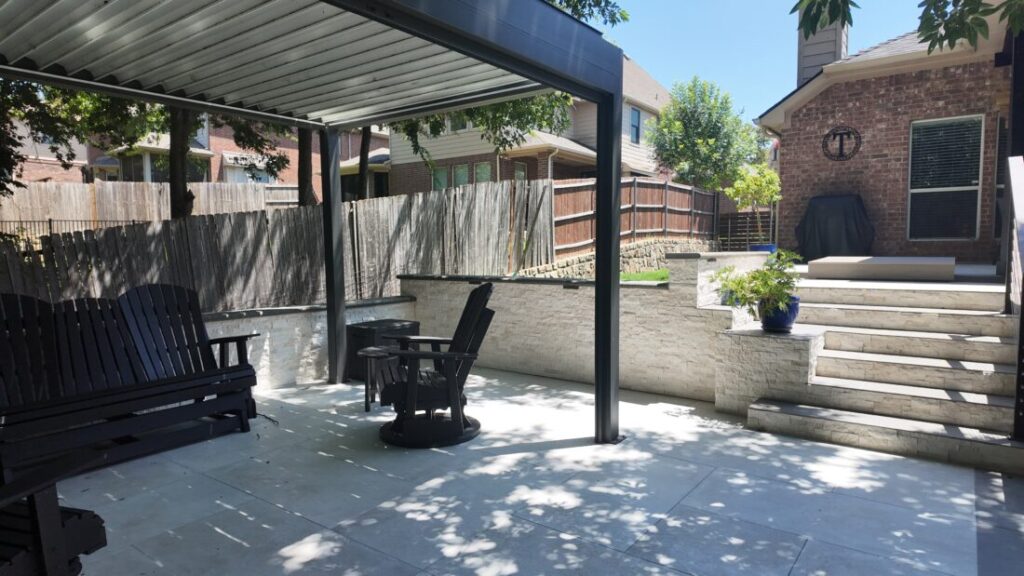
How Custom Stone Retaining Walls Transform Sloped Backyards
A custom stone retaining wall does more than hold back soil. It can help homeowners make better use of challenging terrain while creating an attractive, organized outdoor environment.
From functional landscape improvements to beautiful outdoor entertaining areas, retaining walls offer several possibilities for properties with uneven ground.
1. How Can a Retaining Wall Make a Sloped Backyard More Functional?
A retaining wall can create a flatter, more usable section of a sloped backyard by supporting soil at different elevations. This allows homeowners to incorporate outdoor features that might otherwise be difficult to install on uneven terrain.
Depending on your property’s layout, a custom retaining wall can help create space for:
- Expanded patios: Establish a level area for outdoor dining, furniture, and entertaining.
- Outdoor kitchens: Create a suitable location for grilling stations and cooking areas.
- Garden terraces: Transform steep slopes into attractive, organized planting areas.
- Walkways and steps: Connect different sections of the backyard safely and conveniently.
- Built-in seating: Incorporate stone seating features into the overall landscape design.
For homeowners planning a complete backyard transformation, retaining walls can help connect different outdoor living features into one cohesive design.
Rather than viewing a slope as an obstacle, a professionally planned retaining wall can turn it into an opportunity for creative landscaping.
2. What Type of Stone Is Best for a Backyard Retaining Wall?
Natural stone and engineered retaining wall systems are popular options because they offer durability, design flexibility, and attractive finishes. The best choice depends on the wall’s structural requirements, desired appearance, and surrounding landscape.
Common retaining wall materials include:
Natural Stone: Provides a timeless appearance with unique colors and textures. Natural stone works especially well in landscapes where homeowners want a rustic or traditional aesthetic.
Concrete Retaining Wall Blocks: Engineered blocks offer consistent dimensions and can be used to construct structurally sound retaining walls when installed according to design specifications.
Stone Veneer: Allows homeowners to achieve the appearance of natural stone over a properly constructed structural wall.
Segmental Retaining Wall Systems: Interlocking concrete blocks can be used for various wall heights and may incorporate additional reinforcement when necessary.
For a coordinated backyard design, homeowners can select stone finishes that complement outdoor fireplaces, patio columns, garden borders, and other masonry features.
When choosing materials, it’s important to consider more than appearance. The wall must also be designed to withstand soil pressure, moisture, and environmental conditions.
3. Why Is Proper Drainage Important for Stone Retaining Walls?
Proper drainage is one of the most important components of a long-lasting retaining wall. Water that accumulates behind the wall increases pressure on the structure and can contribute to cracking, shifting, or failure.
According to the Federal Highway Administration, groundwater conditions and drainage are important considerations in the design of earth-retaining structures.
A well-designed retaining wall may incorporate several drainage features:
- Drainage gravel: Allows water to move through the soil behind the wall.
- Perforated drainage pipes: Collect water and direct it toward an appropriate outlet.
- Filter fabric: Helps prevent soil particles from clogging drainage materials.
- Proper grading: Encourages surface water to flow away from vulnerable areas.
- Drainage outlets: Allow collected water to exit the retaining wall system.
These features are especially important in areas that experience heavy rainfall or challenging soil conditions.
Without adequate drainage, even an attractive retaining wall can develop structural problems over time.
Working with experienced outdoor construction professionals helps ensure drainage considerations are addressed during the planning process rather than after problems develop.
4. How Tall Can a Stone Retaining Wall Be Without Engineering?
Retaining wall height requirements depend on local building codes, soil conditions, surrounding structures, and the loads placed on the wall.
Under the International Residential Code, certain retaining walls exceeding four feet in height, measured from the bottom of the footing to the top of the wall, generally require permits. Shorter walls may also require permits or engineering when supporting additional loads.
However, local requirements can vary, and the four-foot threshold should not be treated as a universal rule.
Additional structural considerations may include:
- Steep slopes above or below the wall
- Nearby patios, driveways, or buildings
- Heavy soil loads
- Poor drainage conditions
- Multiple terraced retaining walls
- Unstable or expansive soils
A professional site evaluation can help determine whether engineered plans, additional reinforcement, or special construction methods are necessary.
Planning for these requirements early can help prevent unexpected changes during construction.
5. Can You Combine a Retaining Wall With Other Outdoor Living Features?
Yes, retaining walls can be incorporated into larger outdoor living projects to create a seamless connection between different backyard features.
For example, a retaining wall might support an elevated patio while decorative steps connect the space to a lower garden or lawn.
Other popular combinations include:
- Retaining walls and decorative concrete: Create attractive, level entertaining surfaces.
- Retaining walls and outdoor kitchens: Establish functional cooking and dining spaces.
- Retaining walls and raised stone beds: Add dimension and visual interest to landscaping.
- Retaining walls and covered patios: Integrate different elevations into a coordinated backyard layout.
At Buildometry, custom stonework is an important part of creating cohesive outdoor environments. By coordinating materials, elevations, and architectural details, homeowners can achieve a finished backyard that feels intentional and connected.
The key is developing a complete design before construction begins so that drainage, structural requirements, and aesthetic goals work together.
Frequently Asked Questions About Stone Retaining Walls
Can a retaining wall make a sloped backyard flat?
Yes, a retaining wall can create a flatter section of a sloped backyard by supporting soil at different elevations. The amount of usable space depends on the property’s slope, available area, and structural requirements.
How long does a stone retaining wall last?
A properly designed and installed stone retaining wall can last for decades. Its lifespan depends on construction materials, drainage, soil conditions, maintenance, and overall installation quality.
Do stone retaining walls need drainage?
Most retaining walls require some form of drainage to prevent excessive water pressure behind the structure. Drainage gravel, perforated pipes, and proper grading are common components of an effective system.
Can you build a patio next to a retaining wall?
Yes, a patio can be incorporated into a retaining wall design when the wall is properly engineered to support nearby loads. Both features should be planned together to address structural stability and drainage.
Transform Your Sloped Backyard With Buildometry
A sloped backyard doesn’t have to stand in the way of creating the outdoor living space you’ve always wanted. With a custom stone retaining wall, you can make better use of your property, create beautiful landscaping features, and establish functional areas for relaxing and entertaining.
At Buildometry, we combine custom stonework, patio construction, and outdoor living design to help homeowners bring their backyard ideas to life. Whether you’re planning a small landscape improvement or a complete outdoor transformation, our team can help you explore design possibilities that fit your property and goals.
Ready to transform your sloped backyard into a beautiful, functional outdoor space? Contact Buildometry today to discuss your custom stone retaining wall project.