
Is a Patio Cover or Pergola Better for Extending Your Outdoor Living Space?
A patio cover is typically better when you want dependable shade and protection from rain, while a pergola is ideal when you want filtered shade, airflow, and architectural character. Both can extend your living space outdoors, but the right choice depends on how you plan to use the area, how much weather protection you need, and the style and maintenance level you prefer.
At Buildometry, we believe an outdoor structure should feel like a natural extension of the home, not an afterthought. A thoughtfully designed patio cover or custom pergola can transform an underused backyard into a comfortable place for dining, entertaining, relaxing, and spending time with family. From material selection and structural design to complementary features such as outdoor kitchens, fireplaces, lighting, and masonry, careful planning helps ensure every part of the space works together. Our goal is to create outdoor living spaces that balance beauty, durability, comfort, and the way homeowners actually want to live outside.
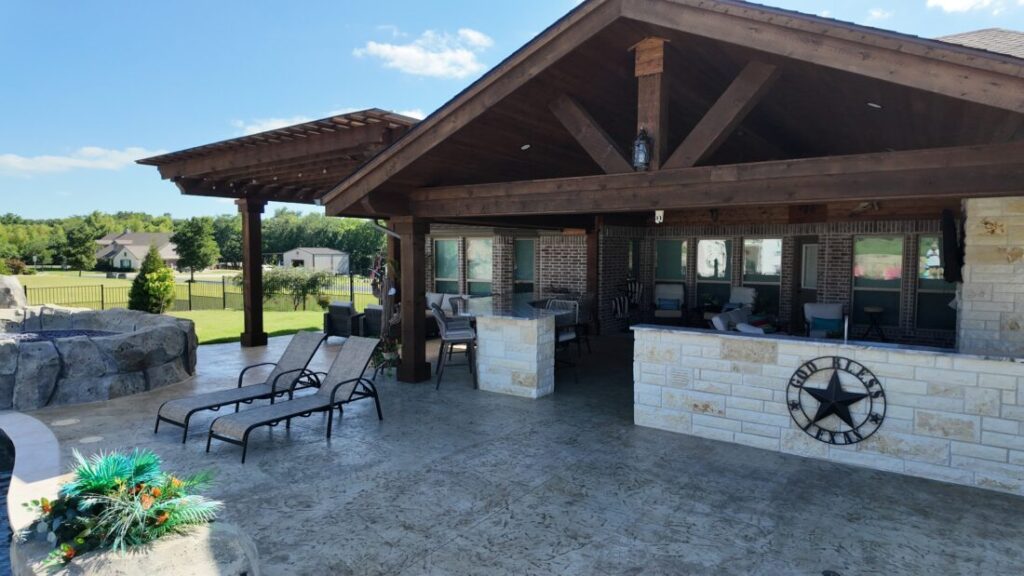
Choosing the Right Patio Shade Structure for Your Outdoor Living Space
The biggest difference between a traditional pergola and a solid patio cover is overhead protection. A pergola uses posts, beams, and rafters to define an outdoor room while allowing light and air through. A solid-roof patio cover provides substantially more protection from direct sunlight and rain.
This Old House describes pergolas as structures that can define an outdoor room, provide light shade, and create a comfortable setting for relaxing or entertaining. Pergolas can also shelter outdoor kitchens, seating areas, and other backyard destinations.
Neither option is automatically right for every backyard. Start by deciding what you want the new space to accomplish.
What Are the Main Benefits of a Patio Cover?
A patio cover creates a more consistently protected outdoor living area, making it a strong choice for homeowners who want to use their patio in a wider range of conditions.
A solid roof can provide dependable shade and help keep rain off furniture, dining spaces, and entertainment features. Because the structure feels more like an extension of the house, it also works especially well over an outdoor kitchen, dining area, television, or conversation space.
Popular benefits include:
- More complete shade than a traditional open pergola
- Protection from rain and direct sunlight
- A defined transition between indoor and outdoor living
- Space for ceiling fans, lighting, speakers, and other amenities
- Protection for outdoor furniture and entertainment areas
- Customization with wood ceilings, stonework, wrapped pillars, or masonry
A patio cover can also be designed to complement the existing home’s roofline and architecture, helping the finished project look intentional.
Outdoor improvements can have benefits beyond appearance. In the National Association of REALTORS®’ 2023 outdoor remodeling research, 60% of surveyed owners reported increased enjoyment of their home after completing an exterior project, and 68% reported a greater desire to be at home.
What Is the Advantage of Choosing a Pergola?
A pergola is an excellent choice when you want partial shade while maintaining an open, airy connection to the outdoors.
Traditional pergolas use an overhead grid of beams and rafters rather than a solid roof. That configuration creates dappled shade without completely blocking sunlight or airflow. A pergola can be attached to the home or built as a freestanding destination elsewhere in the backyard.
Custom pergolas work particularly well for:
- Outdoor dining and conversation areas
- Poolside seating
- Garden retreats
- Fire pit areas
- Backyard pathways and transitions
- Spaces where architectural interest is as important as shade
Pergolas also offer significant design flexibility. Homeowners can choose wider or closer rafter spacing, decorative details, climbing plants, lighting, or supplemental shade features.
If weather protection is your primary goal, however, remember that a traditional pergola is not a solid roof. Rain can still pass through the structure.
Which Materials Are Best for Patio Covers and Pergolas?
Wood, metal, vinyl, PVC, and composite materials can all work well, but each provides a different combination of appearance, durability, maintenance, and cost.
Wood remains popular for custom pergolas and wood patio covers because it offers warmth, character, and extensive design flexibility. It can suit rustic, traditional, transitional, and modern homes, although staining and other periodic maintenance may be required.
Aluminum and steel provide a cleaner contemporary appearance and resist rot. This Old House notes that metal pergolas generally require little maintenance, while powder-coated aluminum is available in a variety of finishes.
Vinyl offers low maintenance and does not require painting or staining, but homeowners may prefer wood or metal when they want a more customized architectural appearance.
Cellular PVC and composites can offer a wood-like appearance with lower maintenance requirements. Some systems incorporate internal reinforcement because these materials do not always have the structural strength of wood on their own.
The right material should be selected based on more than appearance. Consider the size of the structure, exposure to weather, desired maintenance level, home architecture, and other outdoor living features planned for the space.
How Do Patio Covers and Pergolas Extend Your Living Space?
Both structures turn an exposed patio into a defined outdoor room, encouraging homeowners to use the backyard for activities that might otherwise stay indoors.
Think beyond simply adding shade. Decide what should happen underneath the structure.
A covered outdoor living area might include an outdoor kitchen and bar for entertaining, while a custom pergola could define a lounge beside a backyard gas fire pit. Stonework, retaining walls, raised stone beds, fireplaces, decorative concrete, and wrapped pillars can further connect the new structure to the surrounding landscape.
The goal is to plan the complete outdoor environment instead of treating each feature as a separate addition.
Research supports this emphasis on livability. The National Association of REALTORS® reported in its 2025 Remodeling Impact research that improved functionality and livability was the most important remodeling outcome for 28% of surveyed homeowners. Durable, long-lasting results and improved aesthetics were each cited by 23%.
Should You Hire a Professional Patio or Pergola Builder?
Professional design and construction are especially valuable when the project involves structural connections, large spans, foundations, roofing, electrical work, or integration with other outdoor features.
A custom structure must do more than look attractive. Posts, beams, footings, connections, drainage, and structural loads all need to work together correctly.
Professional pergola builders and patio contractors can also help determine whether a freestanding or attached structure makes more sense, how the roof or rafters should be positioned, and which materials complement the home.
That becomes even more important when combining the project with outdoor kitchens, fireplaces, concrete patios, stonework, or other permanent improvements. Planning these elements together can produce a more cohesive finished outdoor living space.
Frequently Asked Questions About Patio Covers and Pergolas
Does a pergola provide enough shade?
A traditional pergola provides partial or filtered shade rather than complete coverage. Shade levels can be increased through rafter design, purlins, plants, canopies, or other shade solutions.
Does a pergola protect you from rain?
A traditional open-roof pergola does not provide reliable rain protection. Homeowners who want dependable overhead protection should consider a solid patio cover or a specially designed roof or louver system.
Can a patio cover include an outdoor kitchen?
Yes. A properly designed patio cover can create a protected setting for an outdoor kitchen, bar, dining area, lighting, fans, and entertainment features. The entire space should be planned around ventilation, clearances, utilities, and structural requirements.
Do outdoor living improvements add value?
Value varies by project, location, materials, and home, but outdoor improvements can improve both livability and buyer appeal. In NAR’s 2023 Outdoor Features report, a new patio had an estimated 95% cost recovery based on the assumptions and professional estimates used in that study.
Ready to Extend Your Living Space Outdoors?
Whether you envision a custom pergola, covered patio, outdoor kitchen, fireplace, fire pit, or complete outdoor living space, Buildometry can help bring the pieces together into one cohesive design.
Ready to transform your backyard? Contact Buildometry today to start planning a custom outdoor space designed around the way you live.