
What Is the Best Outdoor Fireplace Design for a Covered Patio in North Texas?
The best outdoor fireplace design for a covered patio in North Texas is typically a custom-built stone or masonry fireplace that complements the home’s architecture, provides comfortable heat, and allows for proper ventilation. Gas fireplaces offer convenient operation, while wood-burning designs provide a traditional atmosphere. The right choice depends on patio dimensions, roof clearance, local regulations, and how the space will be used.
Creating a comfortable outdoor living space is about more than adding furniture and a patio cover. A thoughtfully designed outdoor fireplace can transform your backyard into an inviting gathering place, especially during cooler Texas evenings. At Buildometry, we specialize in creating custom outdoor living spaces that combine beautiful craftsmanship with practical functionality. From covered patios and outdoor kitchens to custom stonework and fireplaces, our goal is to help homeowners create outdoor environments that feel like natural extensions of their homes. Whether you’re planning a completely new backyard retreat or upgrading an existing covered patio, understanding your fireplace design options can help you make confident decisions about your investment.
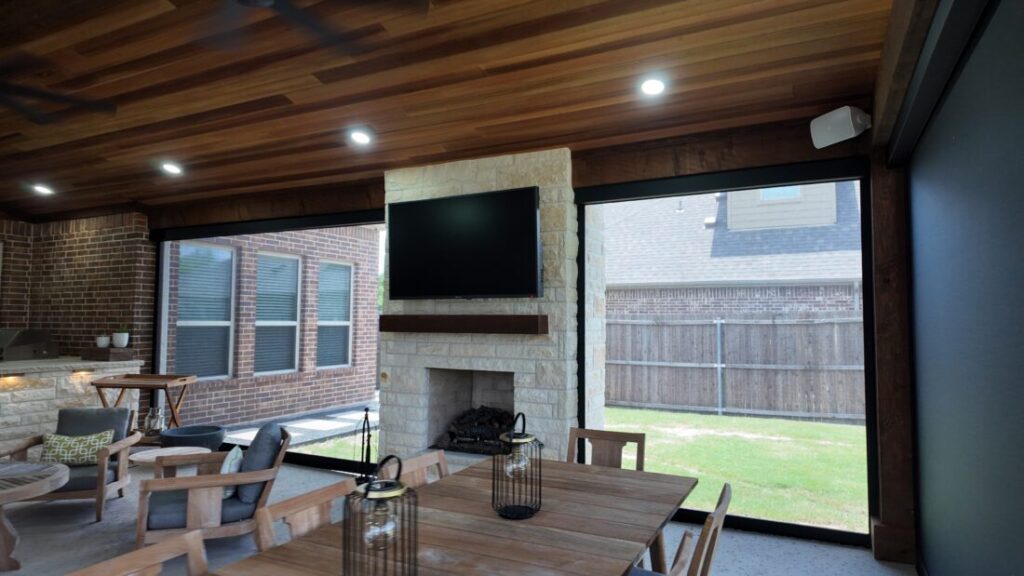
Choosing the Right Custom Outdoor Fireplace for Your Covered Patio
A custom outdoor fireplace should balance appearance, functionality, safety, and long-term durability. In North Texas, where summers are hot and winter temperatures can occasionally drop below freezing, the right fireplace can make a covered patio more enjoyable during the cooler months.
1. Is a Gas or Wood-Burning Fireplace Better for a Covered Patio?
Gas fireplaces are often the more convenient option for covered patios because they provide consistent flames without requiring homeowners to store firewood or clean up ashes. However, wood-burning fireplaces remain popular for their traditional appearance and authentic crackling fire.
Gas outdoor fireplaces offer several advantages:
- Convenient ignition and flame control
- Minimal ash and debris
- No need for firewood storage
- A variety of contemporary and traditional designs
- Consistent operation when properly installed and maintained
Wood-burning outdoor fireplaces provide:
- A classic outdoor gathering experience
- Natural wood-burning ambiance
- Traditional masonry design opportunities
- The distinctive warmth and sound of a real wood fire
The best option depends on personal preferences, available utilities, ventilation requirements, and local restrictions.
For covered patios, fireplace installation must account for combustible materials, chimney or venting requirements, and the fireplace manufacturer’s approved installation conditions. Not every outdoor fireplace is suitable for use beneath a roof.
2. What Fireplace Materials Work Best in North Texas Weather?
Natural stone, brick, and properly specified masonry materials are excellent choices for custom outdoor fireplaces because they offer durability and design flexibility.
North Texas weather presents several challenges for outdoor construction, including intense summer sunlight, heavy thunderstorms, temperature fluctuations, and occasional freezing conditions.
Popular outdoor fireplace materials include:
Natural Stone: Creates a timeless appearance and complements traditional, rustic, and modern outdoor living spaces. Stone selections should be appropriate for exterior exposure and fireplace construction.
Brick: Provides a classic architectural appearance and can coordinate with existing brick homes.
Manufactured Stone Veneer: Offers a range of colors and textures while allowing homeowners to achieve a natural stone appearance.
Concrete and Masonry Components: Can support contemporary designs with clean lines and customized finishes when properly engineered and installed.
The exterior finish is only one part of a safe fireplace. Fireboxes, flues, liners, and other heat-exposed components must use materials rated for their intended purpose.
At Buildometry, incorporating custom stonework into outdoor living designs helps create cohesive spaces where fireplaces, patio structures, and surrounding architectural elements complement one another.
3. Where Should an Outdoor Fireplace Be Positioned Under a Patio Cover?
An outdoor fireplace should be positioned to create a comfortable seating arrangement while maintaining required clearances, ventilation, and safe access throughout the patio.
The ideal location depends on the size of the covered patio, roof structure, seating configuration, and surrounding features.
Important placement considerations include:
- Seating arrangements: Position the fireplace where guests can enjoy its warmth without blocking walkways.
- Roof height: Evaluate the patio cover’s construction and clearance requirements before selecting a fireplace.
- Ventilation: Ensure the fireplace’s venting or chimney system is approved for the proposed covered location.
- Wind exposure: Consider how prevailing winds may affect smoke movement and guest comfort.
- Nearby features: Account for outdoor kitchens, dining areas, televisions, and other backyard amenities.
For example, a fireplace positioned along the perimeter of a spacious covered patio can become a focal point while preserving an open central seating area.
Homeowners should also avoid assuming that a freestanding fire pit can safely be placed beneath a patio roof. Fire pits and fireplaces have different installation requirements, and many fire pits are not approved for covered spaces.
4. How Can You Make an Outdoor Fireplace Match Your Home’s Architecture?
The most attractive outdoor fireplaces are designed as intentional architectural features rather than additions that appear disconnected from the home.
A custom fireplace can incorporate materials, colors, and proportions that complement the existing house and patio cover.
For traditional homes, natural stone fireplaces with substantial mantels and textured finishes can create a warm, established appearance.
For modern homes, streamlined fireplace surrounds, neutral colors, and clean geometric lines may be more appropriate.
Homeowners can also coordinate fireplace finishes with nearby outdoor kitchen countertops, stone-wrapped columns, decorative concrete, or patio flooring.
A unified design helps the entire outdoor living area feel cohesive and thoughtfully planned.
5. What Should You Consider Before Building an Outdoor Fireplace?
Before construction begins, homeowners should evaluate the overall outdoor living layout, installation requirements, and how frequently they expect to use the fireplace.
A few important planning questions include:
- Will the fireplace be gas or wood-burning?
- Is the existing patio cover suitable for the proposed installation?
- Will the fireplace serve a small seating area or a larger entertaining space?
- What masonry finishes complement the home?
- Are gas connections, electrical components, or other utilities needed?
- What permits and inspections will the local jurisdiction require?
According to the National Fire Protection Association (NFPA), fireplaces and related venting systems require appropriate installation and maintenance to reduce fire hazards.
Local building officials and qualified installation professionals should confirm the applicable requirements before construction begins.
Planning these details early helps homeowners avoid costly design changes and ensures the fireplace fits the overall backyard vision.
Frequently Asked Questions About Covered Patio Fireplaces
Can you put an outdoor fireplace under a covered patio?
Yes, certain outdoor fireplaces can be installed beneath covered patios when the fireplace is approved for that application and all clearance, ventilation, structural, and local code requirements are satisfied. The patio roof and fireplace design must be evaluated together.
Do outdoor fireplaces need a chimney?
Wood-burning outdoor fireplaces typically require a properly designed chimney or flue to direct smoke away from the seating area. Gas fireplaces have different venting requirements depending on the appliance and installation.
Does an outdoor fireplace add value to a home?
A well-designed outdoor fireplace may improve a home’s appeal by creating an attractive outdoor gathering space. Its effect on resale value varies based on the local market, construction quality, and buyer preferences.
How much space do you need for an outdoor fireplace?
The required space depends on the fireplace dimensions, manufacturer clearances, seating arrangement, and patio configuration. A professional design should account for safe distances from combustible materials and comfortable circulation around the fireplace.
Create Your Ideal Outdoor Fireplace With Buildometry
A custom outdoor fireplace can make your covered patio a welcoming destination for family gatherings, entertaining friends, or relaxing on a cool Texas evening.
At Buildometry, we bring together custom patio construction, outdoor fireplaces, and detailed stonework to create beautiful, functional outdoor living spaces tailored to your home.
Ready to create a custom outdoor fireplace that complements your backyard? Contact Buildometry to discuss your outdoor living project.